Leaders · September 4, 2026 · 5 min read
If the day has no call blocks, you failed as a leader
You only need two segments to run a sales floor: prospecting and pipeline. If you are not putting both on the board, you are failing as a leader.
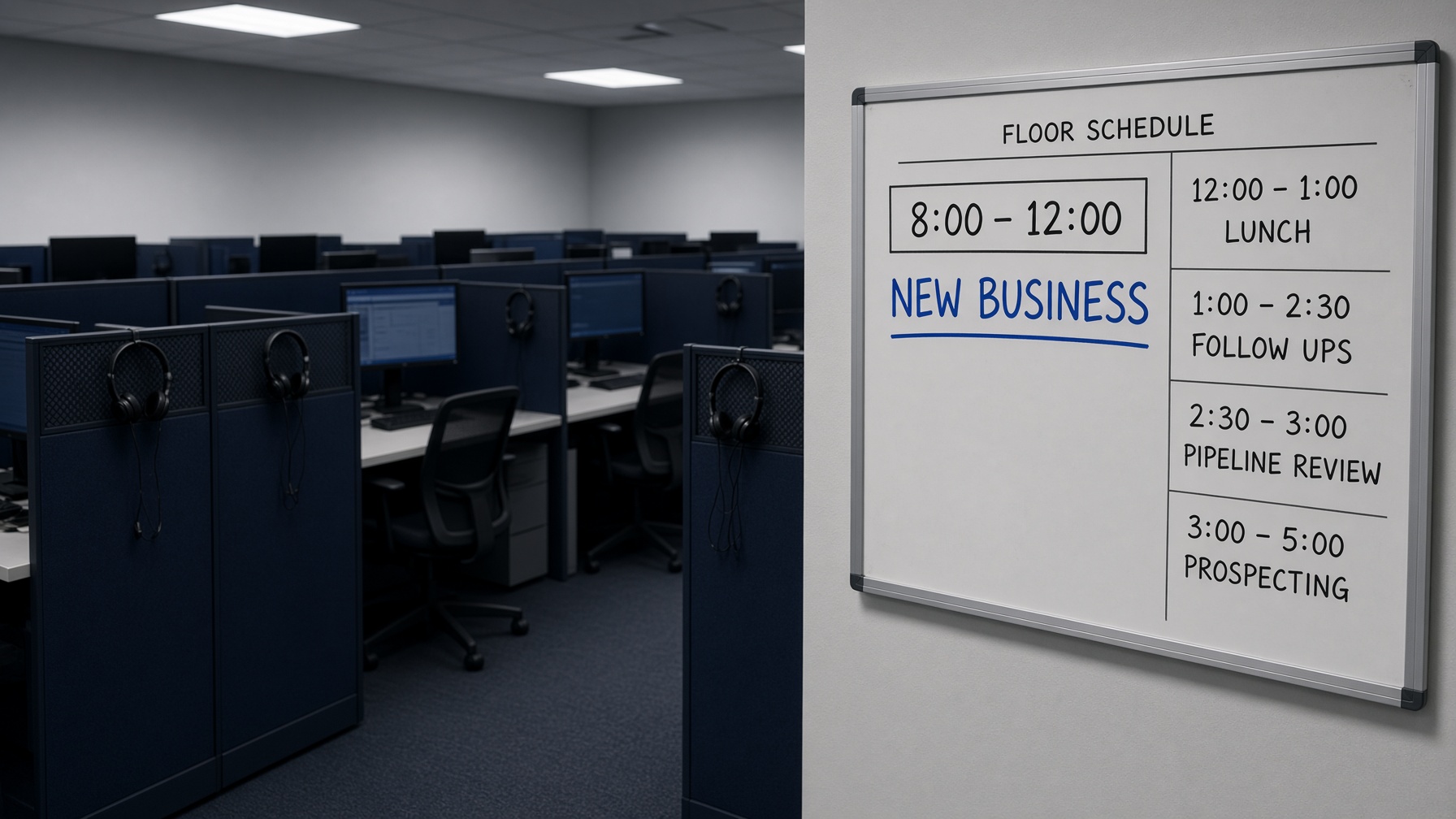
You only need two segments to run your sales floor: prospecting and pipeline. That is the whole structure. Prospecting blocks keep the pipe from going empty. Pipeline time raises pull-through without eating new business. If you are not putting both on the board, you are failing as a leader.
There are only so many hours in a week. You as a leader are in charge of delegating those hours to your staff. Most leaders leave loan officers to their own devices. A handful of top producers will run without you. The majority will not. Structure is what breeds production — not good faith.
If you are not scheduling call blocks, you are failing as a leader.
An empty pipeline ends careers
There is no harder truth in this business. Sales leaders, managers, and loan officers can all get fired for the same reason: an empty pipeline. The best way to protect your job is to fill the pipe. The best way to fill the pipe is a telephone, in a call block. If those blocks are not on your floor, you are doing a grave disservice to your staff — and failing as a leader.
Dials are not a block
A lot of the leaders we sit with require a minimum daily dial count. That is fine as far as it goes. It does not go far enough. Loan officers who do not want to make the calls will fudge the number. They will look busy. The report will look clean. The pipe will still be empty.
Mandatory call blocks solve that. You know they are on the phone. The block has a start and a stop. You can see who is in it. Not only the LOs — the managers too. Management has to be present and active during the block, leading from the front. They live-listen and step in when a borrower goes sideways. That is what “on the floor” means.
Score the floor on credit pulls taken and apps taken. Watch locks and loans sent to processing rise behind those two numbers. If you score dials, you will get dials. If you score credit pulls and apps, the locks and the submissions show up shortly after. The pipeline grows.
Pipeline hour keeps what you already have
In this market the LO should touch each live file every two days. Not a “just checking in.” A real push toward funding: conditions needed, and a next step. Loan officers are more motivated than processors to get a file across the line. That touch is still selling the deal. It raises pull-through. It funds faster.
The trick: pipeline hour never sits on top of a call block. Live files feel urgent because they are this week's money. That is how the pipe goes empty. Prospecting first. Then the files.
The fire is yours, not theirs
This is where leadership earns the hour. If you see an LO in a call block putting out a fire — a processor ping, a borrower spiral, a file that should have been owned yesterday — you step in. You take it off their plate. You protect the block. The only thing that overshadows a call block is a borrower at the closing table who needs help. Everything else waits.
If you ping them instead, you taught the floor the block is a suggestion. If you drop a standup on it, you taught them new business waits. The right move is not that the LO was insubordinate for ignoring chat. It is that they were doing the job you said was first — and you handled the rest.
Install the call blocks. Put managers in them. Have those managers take the fires unless it is a closing. Protect the block at all costs, and watch production grow.